LCL (Less than Container Load)
What is LCL?
LCL (less than container load) is a mode of shipping via ocean. If you don’t have enough cargo to fill up an entire container, consider shipping LCL.
An LCL shipment will be consolidated with other LCL shipments into one container.
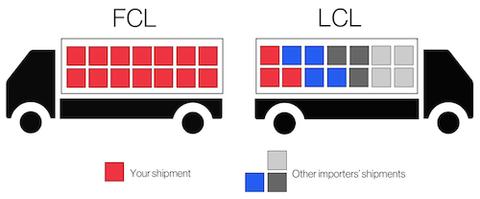
An LCL shipment will be consolidated at a CFS (container freight station) before gating in at the CY (container yard) at origin, and deconsolidated at destination:

How are LCL shipments charged?
Carriers usually charge LCL by the cubic meter (CBM) or by weight, whichever is greater, and there is often a minimum charge. Because of the extra handling at the CFS, LCL costs more per unit than full container load (FCL) once your volume grows.
What are the trade-offs of LCL?
LCL lets you ship smaller quantities more often. Your cargo gets handled more times and waits for consolidation, so transit usually takes longer than FCL and the risk of damage or delay can be higher. If your cargo nearly fills a container, compare an FCL quote.
Back to the full glossary.