LTL (Less than Truckload)
What is LTL?
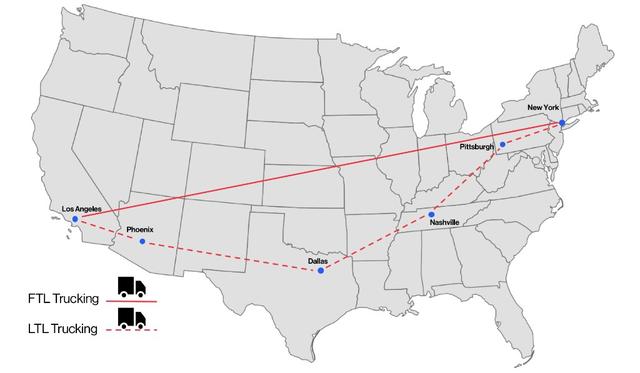
LTL service is used for smaller shipments that take up less than a full truckload and can be combined with other small shipments to fill up a truck. LTL shipments have longer transit times than FTL shipments because LTL trucks make multiple pickups and deliveries. LTL carriers move cargo between trucking terminals en route to the final destination, so if an LTL truck is transporting a shipment from Los Angeles to New York, the cargo might be delivered by one LTL truck to a terminal in Phoenix, and then by another LTL truck to Dallas, and so forth until it reaches the terminal in New York and can be shipped out for final delivery. Shipping LTL is cheaper than shipping FTL because of this longer transit time.
How are LTL shipments priced?
LTL carriers usually price shipments using freight class, weight, distance and any extra services. In the U.S., freight class follows the National Motor Freight Classification (NMFC) and reflects density, handling and liability. Accurate dimensions and weights matter, because carriers may reweigh or remeasure your freight and bill adjustments. If your shipment approaches a full truckload (FTL), get a quote for both.
Back to the full glossary.