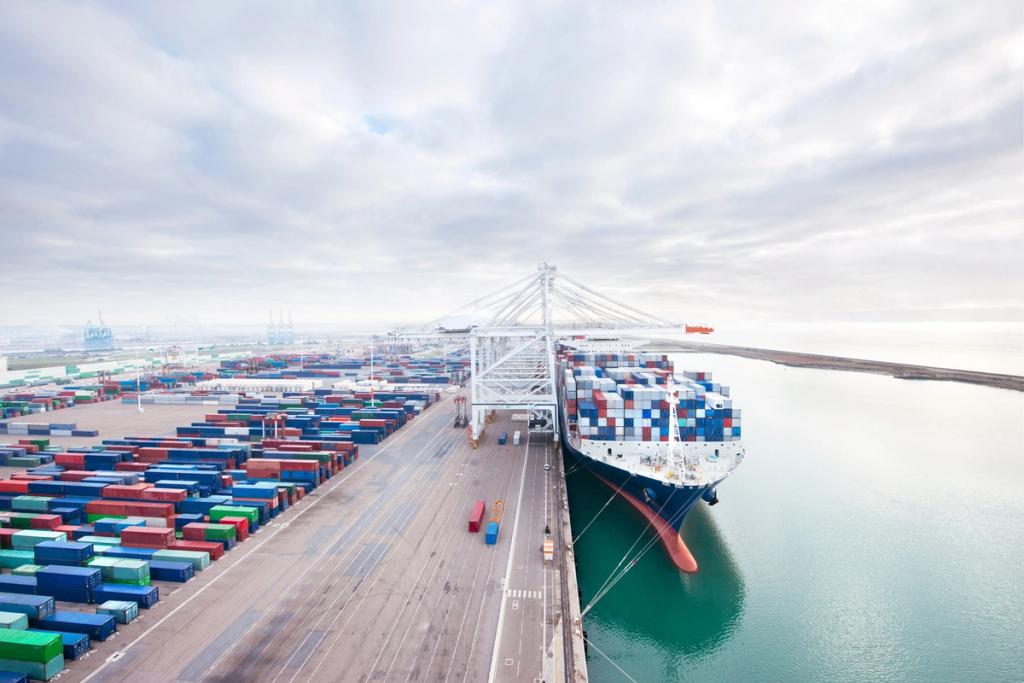
Transatlantic trade compliance is undergoing an immediate shift. On June 30, 2026, the European Commission published its implementing regulations for the US-EU Trade Agreement, which officially goes into effect tomorrow, July 1, 2026.
Under this framework, the EU is eliminating customs duties on a vast majority of US-origin industrial goods and granting preferential access to selected United States seafood and agricultural products. This agreement is planned to be effective through December 31, 2029, with a formal review planned by June 2029 to determine if it will be extended.
If your business imports goods from the United States into the EU, this blog outlines the key structural changes, the immediate compliance parameters, and how to execute this transition quickly.
What is the regulatory framework with the US-EU trade deal?
The EU has issued two specific regulations to implement this trade package:
- Regulation 2026/1455 (The Main Regulation): Eliminates customs duties on imports into the EU for most US industrial goods and opens 20 distinct tariff-rate quotas (TRQs) for specific US agricultural and seafood products.
- Regulation 2026/1422 (The Origin Regulation): Amends non-preferential origin rules specifically to establish the compliance baseline needed to qualify for the new agricultural and seafood TRQs.
What products are impacted under the US-EU trade deal?
Importers must analyse their specific Harmonised System (HS) and Combined Nomenclature (CN) codes against the annexes in Regulation 2026/1455 to determine the exact duty treatment:
- Annex I: Full Duty Elimination
- Operational Mechanism: Immediate 0% import duty on covered US-origin commodities.
- Examples of Covered Products: Chemicals, pharmaceuticals, plastics, metals (iron, steel, aluminium), machinery, vehicles & parts, and manufactured goods.
- Annex II: Partial Relief (Entry-Price)
- Operational Mechanism: Removes only the percentage-based component of the import duty. Fixed minimum "entry price" protective duties remain in place to protect domestic price levels.
- Examples of Covered Products: Specific fresh fruits and vegetables.
- Annex III: Tariff-Rate Quotas (TRQs)
- Operational Mechanism: Establishes 20 specific quotas with reduced or 0% in-quota rates. Once quota volumes are exhausted, standard MFN (Most Favoured Nation) duties apply.
- Examples of Covered Products: Non-sensitive agricultural goods, pork, bison, dairy, cheese, nuts, soybean oil, and seafood.
- The Safety Valve & Safeguards: The regulation includes a dedicated safeguard mechanism. The EU Commission may suspend these tariff preferences if US imports cause or threaten to cause serious injury to EU industries, or if the US fails to uphold its reciprocal commitments under the Joint Statement.
How do importers get the preferential rates under the EU-US trade deal?
To claim these preferential rates, goods must originate in the United States. Because dedicated preferential rules of origin have not yet been adopted, importers must utilize the EU's standard non-preferential rules of origin in the interim. Under the Union Customs Code (UCC), this requires establishing that the imported goods were:
- Wholly obtained in the United States (such as raw agricultural goods or minerals), or
- Subject to their last substantial transformation in the United States (for goods involving multinational supply chains, resulting in a new product or a major change in HS classification).
With the EU-US trade deal - what actions should importers take to prevent disruption?
To ensure your supply chain operates without disruption starting July 1, we recommend taking the following actions:
- Execute HS-Code Mapping
- Validate your active US-origin product catalogues against Annexes I, II, and III of Regulation 2026/1455 to determine which items qualify for duty-free status or fall under a TRQ.
- Audit Origin Documentation
- Review your suppliers' manufacturing workflows and origin records. Ensure you can document and defend either "wholly obtained" status or "last substantial transformation" in the US under the UCC guidelines before claiming preferences on customs declarations.
- Integrate Customs Operations
- Establish immediate protocols with your customs broker. Ensure they are prepared to utilise the new preferential codes on July 1 entries and are equipped to manage the specific data requirements for TRQs.
Operationalizing the Transition
If you need support managing this transition, Flexport can help in a number of ways:
- Tariff Database Matching: We can assist in cross-referencing product catalogs to match your US HTS codes with EU CN Codes to isolate and identify eligible US-origin SKUs under Annex I, II, or III.
- Origin Compliance Reviews: Our advisory teams could review supplier documentation and manufacturing processes to help evaluate compliance with non-preferential rules of origin to assess if your products can benefit from the 0% duty rate.
- Customs Entry Integration: We can support the application of preferential duty rates and can monitor the filling of the TRQs directly within active operational and brokerage workflows to ensure the maximum benefit.
Get in touch with a member of the Flexport team here.
For precise legal texts and full product classifications, please see the official publications: