Flexport 2026 Fall Technology Release Live Broadcast
Ryan Petersen, founder and CEO of Flexport, unveils the 2026 Fall Technology Release: new AI and technology products built to help you move faster and do more with less. The trade environment keeps getting harder. The right tools make the difference. Watch now for a first look at what's next in global logistics.
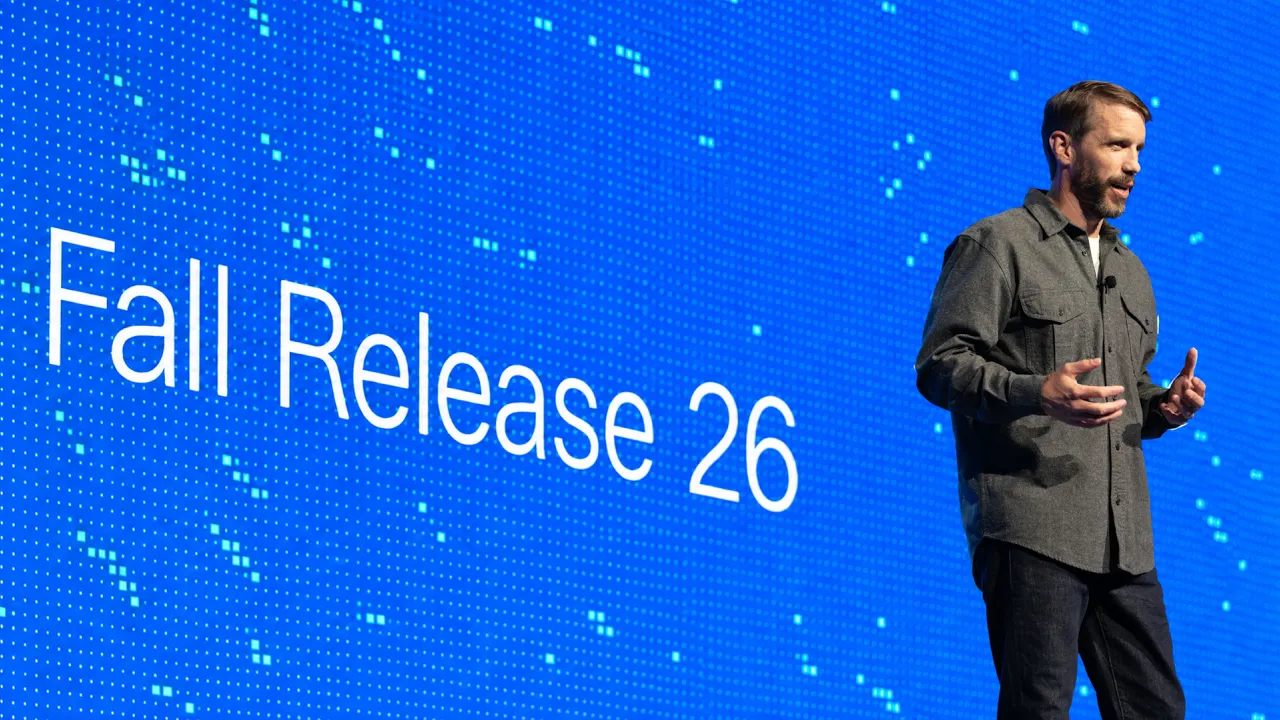
Flexport 2026 Fall Technology Release Live Broadcast
The below transcript has been generated by an AI system and may contain inaccuracies, errors, or omissions. While efforts have been made to ensure the accuracy of the content, the AI-generated transcript should not be considered fully reliable or definitive record.
Ryan Petersen
Thank you. So we've been building Flexport for more than a decade now, and I could tell you we've never seen anything like the last six months in terms of our ability to build high quality software and bring it to you quickly. And the reason obviously is AI and it's... Our software engineers are now coding by just managing this swarm of coding agents. But it's not it's not just the engineers anymore. We actually have more than a 150 operators at Flexport going through an AI accelerator that we've built to teach them how to code, to teach them how to build software securely, to make dashboards to oversee their work, to automate their workflows, automate their team members' workflows. And increasingly what they're doing is going on-site with our customers and helping you automate your workflows and showing you how to get the most out of these technologies. And so the time to launch has collapsed from quarter to today. So we're really just very very excited to show you the latest tech today that we're launching. But before I get into that, I wanna remind ourselves why we do this. And it comes back, we've always been a very mission oriented company. Excuse me, I left my clicker over here. We've always been a very mission oriented company. Really starting going back to this idea that we wanna make global trade so easy that there will be more of it. We do this because, well, trade is a good thing. It leads to prosperity, your business is growing, economic growth, all that comes with that. And if we're honest, the last couple of years have been anything but easy. It's been kind of a nightmare of constant tariff changes and volatility. It's like impossible to keep track of. And not just the tariff wars and the trade wars, but but real wars. Piracy, cyber attacks, I mean you you go down the list. It's been a bit of a mess and all of that just makes us more passionate about our mission. It's more obvious that we need to go and solve problems and and actually creates a lot of opportunity for us to create value for our customers. So it just gets us more and more certain that we're working on good... The right things here. And we've sought from the beginning to be a very customer obsessed organization. Like we don't buy this idea that there's this trade off between technology and relationships or between scale and high touch customer service. We wanna be a white glove customer service organization even as we scale the business. And and AI is finally, once and for all, made it very clear that that trade off does not exist because AI lets you be really high touch, really customized and tailored and help customers in real time with their problems. So it's it's just an amazing world and and we're getting much closer to this to this vision of this autonomous supply chain network where AI is making most of the decisions. It's detecting problems before anybody's aware of them, calculating fixes and then implementing them and actually just going to create these recurring self improvement loops in a supply chain. And for the last decade, some of our competitors have made fun of us or ridiculed us and said, hey, like tech doesn't matter. This is a relationships business. But, even they are changing their tune. It's obvious now that this is the inevitable future where if you think AI doesn't matter, you're you're gonna lose. And so that's really exciting for us and I think a good segue to introduce you to our... One of our first and most exciting products that we're announcing today which is Flexport's MCP. This, for those who are not familiar, this is model context protocol. This is what lets your AI agent talk to our AI agents. And we're launching today with, partnerships with pretty much all the major AI tools, whatever you like. We've got Claude, Copilot from Microsoft, ChatGPT, Muse, that's as well as Grok, GrokBot. So you could connect your favorite AI tool and work with Flexport inside your tool. And so let me show you how it works. This is the cloud example but it's very similar for the others. Go to the connectors menu inside your AI tools there and just search for Flexport and add us. And from there you'll be able to do a whole bunch of powerful things starting in this example, just use natural language and you can track shipments. Say where's my stuff, what's happening, and we'll get you real time status updates for what's going on with your with your freight. Now you can also just talk to it, natural language again, and get quotes to ship anything anywhere by any mode of transport. And these are bookable so you can just actually book freight inside the AI tools. This is a really big deal, you know, that's a nice little simple user interface, kind of friendly and nice, but you're gonna see really powerful automations that you're gonna be able to build. Like I'm really excited to see how you put this to work because now of course your AI has this capability to go ship containers anywhere in the world, to go execute and you can build all sorts of automations about this. The more data that you connect and into the same AI tools you already use where you've got your enterprise data governance policies in place, so you can now, if you add your inventory data, which if you use Flexport fulfillment is also very easy to do, but you add your inventory data, you can connect email tools to be able to set up automation... Automated workflows. So in my view this is not just a really powerful kind of moment in logistics industry but for the AI industry. Like allowing AI to ship containers around the world is kind of a big deal. It's gonna be very exciting to see where this goes. And so that's quoting and booking inside your AI tools. Well we also made some big changes to how we do quoting and booking inside the Flexport platform. Frankly long overdue changes. We totally rebuilt our rates management system from the ground up, unifying air freight, ocean freight by all contract types. So spot market, whether you have a named account kind of contract for an annual basis or you're getting monthly rate sheets from us. These are all now in one friendly kind of e commerce experience. Make it very easy to quote, book, check out, like you'd expect from an ecom experience. It's a much better flow. Thank you for your day to day operators doing this work, for partnering with us and it's very collaborative so it works with your suppliers as well. So that's an update to the rate sheets there. Many of our customers actually don't really wanna log... They don't wanna use the AI tool or they don't know if they haven't gotten there yet. They don't wanna log into the platform, they just wanna get their rates in a nice excel file. It was very common, very normal because you have your own templates. You wanna see like the line items broken out a certain way and always have it be the same way. Historically that's been a lot of work for our teams, we have to go and do that ourselves. So with this update now, we have an AI agent that will transform our rates into your template automatically, very quickly, freeing up our teams to do more... It's not the highest calling of civilization transforming Excel files. So, this frees our team up to do more important strategic work for you. So I think you're gonna like this. It'll make us much faster and, just better. Next, a lot of you still prefer the really old fashioned way, just email and get some rates. Sometimes that's easier frankly, right? Just email us. So that, we've we've now built an AI agent that's monitoring our team inboxes where you communicate with us and looking for quotes and booking requests and it will just automatically, if it's a quote, generate the quote for you and return that and let you know put it into the platform and then return... Send you an email letting you know it's ready. Sometimes instantly but always very quickly. Showing you the rates right there and again you can go right through that same e commerce experience to confirm the booking or you can just send us a booking and we'll we'll... By email we'll we'll take care of it. Like all this makes clear that logistics now has a new workforce and I'm only just showing you a couple of examples above the surface here. We've built hundreds of these types of AI agents that are automating workflow at Flexport. Freeing up our teams to do more strategic work and this is an infinitely scalable workforce. They don't sleep, they don't take vacations, they improve quality and efficiency. And... But the interesting question I guess, you know, as we've done this because we've automate... We're on pace now run rate to automate 21,000,000 tasks. It's a huge percentage of the work of freight forwarding and logistics is being taken over by AI agents. And the the question we ask constantly and the thing that we focus on more than anything else is how do you trust these agents to do a good job? Because we all know these are probabilistic systems. They're prone to hallucination. It's getting better as these models continue to improve but it's still a really big deal and supply chains are too important just to YOLO it and hope that the AI agents get it right. And so what we've built is there's a number of strategies that we use here to get to trust and safety as we do this. And it starts with Evals. It's a set of tasks that we put through every agent long before it's able to go into production and actually do work in the real world on behalf of our customers. Because we're doing a huge gamut of tests and, and testing a thousand different ways to make sure that it it gets the result that we want. We have a a tracing methodology for reviewing the chain of thought for every agent, for monitoring anything that's not working as we'd expected. We do a lot with humans in the in the loop where there are people monitoring this and especially early days when an agent's first coming online, we don't let the agent do any work. We have it working in parallel with the human operator doing that job. In some cases we'll never take the human out of the loop especially in compliance areas or in customs and I'll show you some examples of that a little bit later. But ultimately what this is doing is allowing our team to focus on more important things. We don't we don't believe that this is about cutting headcount. I think you're gonna see it Flexport's headcount grow faster as a result of being better at our jobs and how, having a higher quality service that we can grow faster. It's an interesting dichotomy because you talk to a lot of companies they're just like, oh I can use AI to cut costs and remove labor, but we think that's not the important thing that it can do. And and the most important work we can do is for sure is help you grow your business. That's the main way that we can align our interests with our customers' interests. If you grow faster, you'll ship more stuff, we'll make more money. It's a happy world that we wanna live in. Well I wanna hear... I'd love for you to hear from one of our fastest growing customers is Comfort on how we've helped them with our technology and our solutioning.
first_name last_name
Comfort is one of the fastest growing apparel brands of all time. We are wildly known to be successful for our fleece hoodies and our airplane mode hoodies, specifically. We're pushing into other apparel categories as well as home, so we now have the number one selling blanket as well.
first_name last_name
I didn't quite realize what phenomenon comfort was until I told my niece that we work with Comfort. She couldn't believe that her uncle gets to work with Comfort. She couldn't believe that I could hook her up with a Comfort hoodie. So that's when I realized, wow, there's more to this brand and the phenomenon that it's becoming.
first_name last_name
We have been so lucky to grow with Comfort over the years. Back when we started working together in 2022, we saw this incredible product that had really, really exciting things ahead.
first_name last_name
Last minute surprises are never something that I want to experience, but when and in the off chance that we do, the Flexport team has been absolutely wonderful and very quick to get things done, to respond, and to move fast. And that's the flexibility that allows us to have those last minute viral events. We've gotten really good
first_name last_name
at predicting with as much technology and predictive patterns as we possibly can. And then, ultimately, sharing of labor within the warehouse allows us us to handle the spikes that can feel unpredictable.
first_name last_name
I love working with Flexport. I love a partner that's able to bring me an issue before I find it myself. There's no way we would be able to do this without the relationships that we've built with the team across the entire Flexport organization.
first_name last_name
Yeah. Thank you to Alexandria and their comfort team. It's been incredible to see your growth and and be part of that. Now I talked a lot... A little bit about here about trust and how do we build these AI systems that you can trust. Well, there's probably no place that's more important for that than in customs. Right? Because this is compliance. This is high dollar amount. You gotta follow the rules and you gotta not overpay your tariffs. And for that regard, we built the customs technology suite, which we introduced a year ago at this conference. And, you know, the... Probably the most important product pillar here is the tariff simulator, which is the most widely used tariff calculator in the world for figuring out US tariff. There were 53 changes to the tariff code in fifty two weeks last year, so you need this to avoid mistakes. But the update I wanna share with you is actually on our compliance audit technology. We launched this last February. So we've had half a year or so of results to share. What the compliance audit lets us do is take customs entries filed on your behalf by one of our competitors and audit those and look for mistakes. One of the meaner products that we've built. And what this lets you do is... Well, not surprisingly, given 53 changes to the tariff code, these companies made a lot of mistakes. In fact, it's kinda horrifying. We audited more than a billion dollars worth of merchandise, and we found a 20% error rate on average across all the competitor entries. This is for IUPAA, not surprisingly. Right? Because it was so volatile. That number matters a lot because it's not a coincidence this is approximately the same percent of tariff refunds that the government has not issued because they won't issue a refund if you file the entry wrong the first time. So that I wanna share our our own stat on these same entries, 0.2%. Let's say, two orders have been due to 100 x improvement. There there will come a day where if you're not using us for customs brokerage, it means you don't care about customs compliance. I don't know if we're there yet, but, and, we're... But we're not stopping there. We're we're extending the compliance... The tariff suite to add a new module here that we call the business rules engine. And what this does is you all have arbitrary arbitrary might be the right word. You have lots of rules, of how you run your compliance programs. And we call these, like, standard operating procedures, SOPs. It's like, usually a Word doc, a Google doc, or a markdown file. Actually, increasingly, it's a transcription of a conversation that we can have with you, but we're gonna document how you want your customs entries to be filed. I I give you an example. This is a real one from one of our customers. Not the weirdest rule, but you can see the types of problems that you get into where they have this rule that if the invoice starts with these particular three digits, discount the tariff... The commercial invoice value by 10%. Okay. I... I'm not gonna explain why this rule exists. I refuse to learn actually, but I'm sure there's a good reason. And so this is a big deal because if you don't get it right, you overpay your tariffs by 10%. And also really hard, like the way that the whole industry including Flexport until now would have to manage this. We could write custom code, but that's quite expensive and it's a small percentage of entries for one customer. The ROI wasn't there. So the way you would solve this is have an expert customs broker monitoring every invoice and, like, checking this and making sure. That's very error prone, costly, and, really actually put a lot of risk if that trained person leaves the company that you're in a really tough place. So what we've done is we've built an AI system here. And this is a really good example of how we can get trust out of an AI system because I can't do probabilistic compliance. Right? Like I can't just use AI and hope that it gets this right. So what we do instead is we have AI interpret these docs, these SOPs of yours and write code. And the code is deterministic. The code will run the same way every time. So we're taking your SOP, outputting code, our experts are reviewing the code and signing off. Yes, this will work to solve the customer's problem and it'll run the same way every single time. We're gonna take that 0.2% rate of compliance issues way down by being able to really deep dive and follow the exact process that you've defined in your business. This is now live for customers doing US customs brokerage with Flexport, coming to the rest of the world for customs. And ultimately, this is gonna be an approach that will scale really nicely into all other parts of logistics where you have SOPs. There's a lot of things shaped like this across your logistics, your delivery schedules, many other things that you want. And so expect this approach to really scale and show you a great example of how you use AI, how you can trust it, and how you can now use it to scale high quality service. Okay. Another, like, really hard part of customs, maybe the hardest, is classification. And we're now tackling that with AI as well. We're introducing today our AI customs classification engine. Classification is so hard because, well, there's 18,000 HTS codes in The United States, and they're not harmonized around the world, by the way, for some reason. I thought that was the h, but they're not. So you have 18,000 unique codes. A product has to be in only one and only one HS code when you get this right. And this is the state of the art of our industry. That is not an AI generated image. This thing keeps getting thicker and thicker. That's the HTS code, the official guide from CBP. It's now a museum relic in our Atlanta office. If you're visiting us, you wanna see that thing. Well, this is still state of the art at most customers brokers in the world. I mean, as you can see, this is well worn. They got their tabs, and that maybe they have it that they prefer the PDF format where you can control f and find what you're looking for. But it's really not the way that this is gonna work in the future. And so today, we're introducing our AI classification engine. It works how you'd expect. You come in, tell us what your product you're classifying, give us some details about it. The AI will talk to you. It will ask you questions. It will help you... We will collaborate together with the AI to get you an HS code. Now there's a couple of important caveats here. C b... First off, this is a research project. We're we're releasing it to you so you can start playing with it and I think you'll find it very valuable. But second is that CBP doesn't accept AI classifications on their own. You have to have a licensed broker and so we've built that into the flow here. There's a human in the loop, an expert customs broker where you can send it to trade advisory and a licensed customs broker will review your HS code and sign off on it or change it and that allows you to then use it in your trade compliance programs. So really powerful new tool. Excited to bring that to the world. I hope you have endless fun reading. More fun than reading the the real tariff guide. I'm sure of that. Now we're just really proud to say we've helped a lot of customers navigate the tariff volatility. Right? More, the the tariff simulator has become, as I said earlier, the most popular tool for calculating tariff code. In fact, the number one user of tariff simulator is customs and border protection themselves, trying to figure out what's going on. And, I I want I want you to hear from one of our customers. We've we've put... Even before the, IEPRA refund started, Flexport had already put more than a billion dollars of tariff refunds back into our customers' pockets over the last five years. A billion dollars of cash into your bank accounts. It's the stat I'm most proud of is putting money back in our customers' bank account. And I'd love for you to hear from Life Fitness, one of our really great customers on how we've partnered with them to put money back in their pockets.
first_name last_name
The one thing that makes the supply chain complicated is that we do source from a lot of countries from around the world. Now with the the tariff situation, prices have increased a lot.
first_name last_name
It's a
first_name last_name
lot more dynamic than it used to be when I first started, and it's hard for a small department like ours to keep on top of those changes.
first_name last_name
Being able to turn to Flexport and have that expertise in our corner, super helpful for us.
first_name last_name
We really like what Flexport was showing us. It's been really fruitful.
first_name last_name
Our partnership with Life Fitness has been absolutely fabulous. We started off at what I'll say is the compliance level, and we ended up at the c suite because we identified a lot of opportunity, and the business was like, wait a minute. Is this real? How can we potentially get there?
first_name last_name
This is where Flexport technology can really make a huge difference. And in Life Fitness' case, we can go back and look at their past history and find mistakes, find refund opportunities, areas to improve.
first_name last_name
We could provide the expertise and the guide rails and the guidance of, well, do you have this? Do you have that? Because if you do, this is what we can potentially do in terms of getting more refunds for you. We're not here to basically sell you technology or tell you you're doing things wrong. You know your business better than we do. What we are here to do is to guide you through the overall process. These are some adjustments you might wanna make on your side. And if you can, here's the realized savings. Once Flexport took over the service
first_name last_name
for us, we have seen a great increase in the drop back refunds.
first_name last_name
Flex has been an expert. They have all the information.
first_name last_name
And we do get that support that we need from them.
first_name last_name
Alright. Very exciting. It's a live fitness. It makes me wanna go ride elliptical machine. So... Alright. Now we've said how important trust is with these AI systems, and we're building all kinds of governance capabilities to make sure you can trust it more. But to my view, the number one thing you can do to trust the I... AI model is have the model be smarter. And the the... One of our big approaches to this is what we call Flexport Atlas. Now you and I... You out here mostly know Atlas as this great user experience where you just log in on atlas.flexport.com and it gives you the ability to search all the world's services for ocean freight to move the best way to move a container from door to door, the different routes the ships are following, real time tracking, etcetera. That's how humans view it. Some people have called it Google Maps for freight. Well, AI agents see it differently. They see this as a foundational world model they can use to reason about the world of logistics, what's actually happening, ground truth in the real world. And for them, it's a huge... I think that actually what you'll see is over time, the main users of this is those AI agents. You're gonna see more traffic from AI than you will from people. So we're making a few really big updates to Atlas today. The first is it's going multimodal. So we've added air freight, rail freight, barge freight. This allow allows you to track... To calculate the best way to ship anything to any two places on earth. For the example of air, you just type an origin airport and a destination airport will show you all the airlines, all the flights, the times of departure for all the cargo flights in the world. That's both belly passenger wide body, belly freight as well as freighter only. And it'll show you those options, give you a sense of how this works. Now we're all used to this from the passenger world obviously for the last few decades but this is new in the world of air cargo. Click on a plane, you'll get real details in there about what's what's going on with that flight. Now on the rail side, the way to use that is simply choose an origin port anywhere in the world and a destination port including inland rail intermodal ports, inland container depots they call it in some countries. And we'll show you both the ocean routes, the different service offerings for how to get there with the rail leg all the way. So in this case I did Vung Tau in Vietnam to Chicago. Really powerful here you can choose via ports. So You can say, hey I know actually I wanna get to Chicago via Prince Rupert up in Canada and it'll show you that Canadian rail leg with a northern border crossing to clear customs on the Canadian border. So now barge works very similarly, choose a rail... A river port, a barge port. This is really big in Europe, so you can take Tilburg for example, a Netherlands port on the Rhine River there and we'll just show you the trans shipment that happens in Rotterdam, put it on a barge and move up there. Notice a couple of things here. You're seeing now carrier published transit times, but just under that you see Flexport observed. This is where our data science models are calculating this machine learning model, calculating our best estimate of how long that transit time will take, which is often different and more accurate than what the carriers are publishing. So... And that's... Those models just continue to get smarter and smarter as we refine the model and feed them more data. Now the other big change you're seeing here is we're... We've added emissions tracking. This is using the same certified emissions tracking calculator that our customers get to use inside the Flexport platform now brought to Alice. So that estimate there will be the same as what you see when you're doing your reporting inside of Flexport for your final kind of governance reporting on carbon emissions. So there's some big changes to Alice. Now okay, the next big update for Atlas is something I really love playing with. It's a little bit horrifying and this is our disruptions layer and there's a lot to study. I mean, obviously, we have the wars, the straight of Fort Muse. What we've done here is we've curated a set of news sources around logistics disruption. We have AI monitoring them and then putting them on the map with these little exclamation points. And I say horrifying because, wow, there's a lot going on. We've had we've had pirate attacks, fires, typhoons, tariff. We've added the tariff, trade wars on the capital cities. You'll see any changes to the tariff updates. It's it's it's it's entertaining, but the goal it it it's despite being somewhat depressing, but the goal here is to help you get a sense for what's really happening in the world. What what are the disruptions that matter for your supply chain And bringing that all back ultimately, that is what the point of this is is how do we help you manage your supply chain? And the best way that we do that is on the Flexport platform itself where Atlas map and Atlas world model powers the homepage here, which we call the single pane of glass. It powers all the tracking in Flexport app... Flexport platform. And so we've made a few big updates to that as well. The the most used page on the app, where your day to day operators spend their most time, is on the shipment details page, the drill down into a given shipment. And so we've totally overhauled this just to really streamline the data. We've taken all the clutter out of your timeline for a shipment, just made it really easy to find exactly what's happening. We... Our design team worked really really closely with a whole bunch of your day to day operators to figure out what are the annoyances here, how do we make that much more efficient, and the feedback we've gotten so far has been incredible. So this is live for all customers in the platform. We've taken the messages which were sort of conflated in that timeline and moved them off to the side here and a nice unified inbox or here's all the messages related to the shipment and at the top are the tasks that you need to get done. So this shipment's never delayed because of you. If we need you to do something, it'll tell you right here. And that's overall the goal for the wider platform as well. And so we've overhauled how we do task management across the board. So all of your tasks that your operators need to do to keep your supply chains moving, so there's never a delay caused by you. They're all presented right here whether that's give us a document, fill out a form, give us some data. It's all there in a really easy to use interface. And the idea of this is collaborative, right? Is you you have a role to play, we have a role to play, but so do other parties in the chain. That's that's why we call it a supply chain, right? Is that your factories need to come on board and be able to do things. Your warehouses, other other companies that you may interoperate with. And so Flexport is built as a multi player collaborative workflow engine to make it easy for everybody in the logistics network to do their job. And we've also made a big update to how we do invitation management for those partners, for your factories, your suppliers, or others to make it really easy for you to track who's been invited to the platform, what's their status, have they onboarded properly, what data do they have access to, etcetera. So that's a really nice simple overhaul that was also long overdue. Now speaking of your suppliers, we've and your partners and customers around the world, we've translated Flexport into two more languages. That's French as well as Japanese. And that brings to a total of 11 the number of languages that we've translated Flexport into. The idea here, of course, is to eliminate friction. We're gonna make global trade easy and one more thing, no more language barriers. If there's a language we're missing, let us know. Now we're also... I'm really proud of Flexport's progress this year. It's... We're not even done with the year and Flexport's opened in eight new countries where we put boots on the ground, put our own operators in these important markets. What we see when we do this is our quality goes up, our prices come down and our growth, not surprisingly, improves. That's because we're doing local relationship management with suppliers and customers in those markets. We're negotiating better procurement rates between trucking and warehousing or ocean and air freight, and just life gets better. Our business grows. So we are very committed to this global expansion roadmap. In fact, if you look at our network today, we're really blanketing the earth in amazing Flexport people. And this I... This is becoming a real differentiator for us in the age of AI, in the age of software, is that we're not just a software company. We've got people who are experts in that market, building relationships, handling exceptions, solving problems, rolling up their sleeves, applying elbow grease, we'll do what it takes. So if you're visiting any of these great countries, let us know. We can also be your tour guides. We'd love to we'd love to host you. Our plan is to to people the earth even further. We wanna be all over the world, but we're proud of the progress that we've made so far. And the vision again is to help you find your best supplier and work with them or your best customer anywhere in the world make that really painless. And for e commerce brands, one of the ways that we're doing that is expanding internationally as well with our fulfillment center network. So we've launched now two overseas fulfillment centers, Canada and The UK. So we can allow you really simply and to forward deploy inventory into those markets, lower your cost of parcels that are going to those places, make sure the customer never has to deal... That they're gonna get faster shipping. But really importantly, we never want your end consumer to have to think about customs. Like if you already have moved the goods in there and Flexport can make that painless. This is... These these are the first two of many. We... I really love this vision that you just work on amazing products and an amazing brand, and we'll make it really easy to get those products into the hands of customers anywhere in the world. We... Fulfillment centers are not cheap to launch. We like to do it with anchor customers or people who wanna... Who who have a road map. So we're... We'd love to hear from you what else matters. We expect to be launching in Netherlands, and other parts of Europe next year, probably in a few places in Asia Pacific as well. So come talk to us about where you... Where where that matters for you. And then speaking of fulfillment and speaking of this vision, one of the more exciting things that we're showcasing today is the launch of our newest automated fulfillment center. We've got more than 350 robots operating in this incredible building just outside of Chicago. You're gonna... What you're gonna see here is costs are lower, inventory accuracy is higher, speed turnaround, all the things you'd expect. And this is just our first foray into robotics in the fulfillment centers and is a wider network. But this is obviously... To my mind, this is obviously the future. Expect to see more investments from us because what we wanna live in is this world where AI is doing most of the decision making and making logistics really optimized and then on the ground, it's gonna be autonomous trucks and robots and we we think we can play a major role in bringing this future to life. And we we do it because it's... Well, it's really exciting and... But it's... It comes back to that idea that you as a brand can just focus on making your products amazing and making your brand stand out so that you can connect with the customers of that brand, make it really easy, everything in between, we want to make reliable infrastructure that just works, that's affordable. Increasingly, it's gonna be autonomous. We're gonna have governance systems and model fine tuning and ways that you can trust the AI and then ultimately on the ground execution carried out by robots. That to me, that's like the inevitable future that we're going towards. I am like so... I think that's such an optimistic future to get excited about. Your businesses are gonna rip. We saw in the in the twentieth century with the invention of the shipping container, the price of shipping things came down 95%. It created an entire new industries. It it created an economic boom that lasted for decades. I think you're gonna see very similar things here happen in the age of AI and and happen as your supply chains become more reliable, enable entire new classes of experience for you to grow your business. We're beyond privileged to be a partner doing that with you, building this future with you. And so I I... I'll I'll stop there and say thank you very much. It's it's the honor of our lifetime to be able to work with you in this manner, and so God bless everybody. Thank you.
Related webinars
 SustainabilityApril 29, 2026Watch now
How to Cut your Supply Chain Emissions & Cost with Data-Driven Insights
The most practical way to cut carbon is to run logistics more efficiently. Using SCO tooling on SKU planning, container utilisation, and air-to-ocean modality shifts.
 AI & TechnologyApril 9, 2026Watch now
From Visibility to Autonomy: What’s Next for Your Supply Chain?
The self-healing supply chain is already being built. The three steps from unified data to systems that act on their own — with Atlas, SCO and Digital Routing Guides shown live.
 Data & VisibilityApril 2, 2026Watch now
Flexport Supply Chain Optimization Analysis: How to Cut Freight Costs with Data-Driven Insights
Most companies cannot see how much they overspend on freight. How live booking data and AI surface savings in lanes you already run — with approval kept in your hands.
 AI & TechnologyMarch 11, 2026Watch now
Flexport’s Native NetSuite Integration: How Tracksmith Automated Their Global Supply Chain
Tracksmith connected NetSuite to their supply chain in under 30 minutes and stopped chasing shipment updates by email. How the integration handles POs and landed costs.