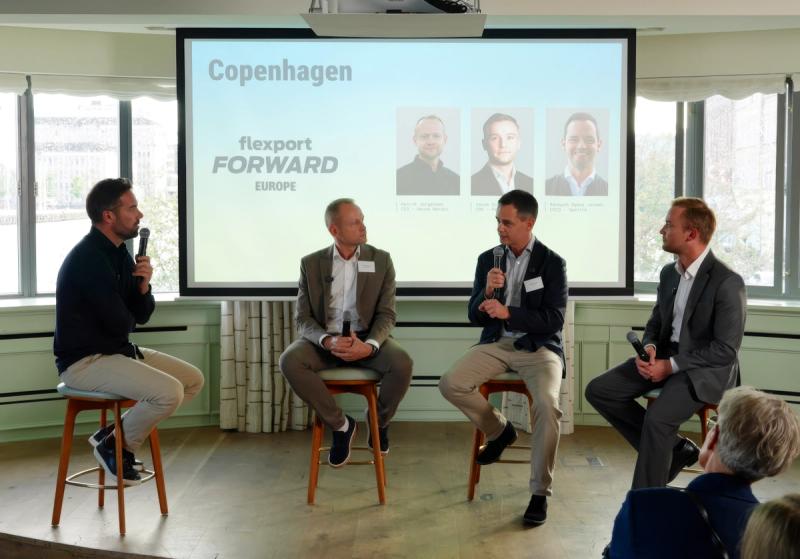
This month, Flexport hosted its first Flexport Forward event in Copenhagen, inside the city's historic customs house, now Soho House Copenhagen. The evening focused on untangling modern supply chain complexity, from volatile ocean trade lanes to practical AI applications and peer learning. For those who couldn't join us in person, here are the core themes from the night.
Technology fixes volatility. Expertise executes it.
Doug Brown, SVP of Europe, opened the evening by reflecting on how far the industry has moved from static spreadsheets, siloed shared drives, and rigid carrier schedules. He pointed to Flexport's momentum across Europe, where the company has operated for a decade and in Scandinavia for nearly as long.
That regional commitment comes with physical infrastructure to match. Flexport has launched operations in Belgium, France, and Poland, gone live with UK final-mile fulfillment, and expanded origin infrastructure in sourcing hubs like Vietnam. For Nordic businesses importing freight, that means software intelligence backed by real operational reach at every port and border.
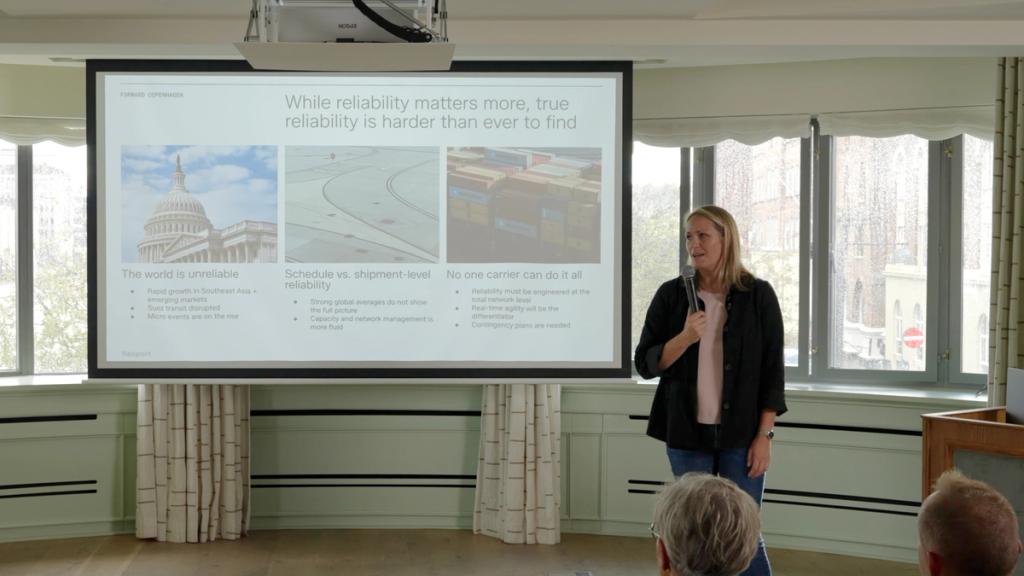
Trine Nielsen, VP and Global Head of Ocean Freight, put it plainly: digital tools and algorithms alone can't fix supply chain disruption. Global trade runs into a steady stream of friction, including geopolitical shifts, extreme weather, labor strikes, blank sailings, and port congestion that can send carrier schedules to zero reliability.
- Automated Carrier Planning: our backend allocation system routes bookings to the best vessels using cost, transit time, space, and reliability data, filtering out underperforming carriers during slow periods.
- AI Data Structuring: AI processes unstructured data, like news, dwell alerts, and emails, to flag bottlenecks such as low Panama water levels or labor actions in Hamburg before they escalate.
- Flexport Atlas Tracking: combining Automatic Identification System (AIS) data, berthing schedules, and dwell metrics gives predictive lead times that outperform carrier schedules by 10 to 15 percentage points, cutting the safety stock businesses need to hold.
- In-Flight Optimization: real-time tooling flags consolidation opportunities at booking, so shippers can adjust lead times slightly and combine shipments into high-cube containers for savings.
As Trine noted, a reliable schedule and a reliable shipment aren't the same thing. Managing market turbulence takes tools that free up Flexport's experts to spot bottlenecks early, protect client margins, and resolve exceptions before cargo gets rolled.

Key takeaway: AI and technology help manage volatility, but not on their own. Supply chain resilience comes from AI, physical infrastructure, and human expertise working together.
The rhythm of Flexport's product releases
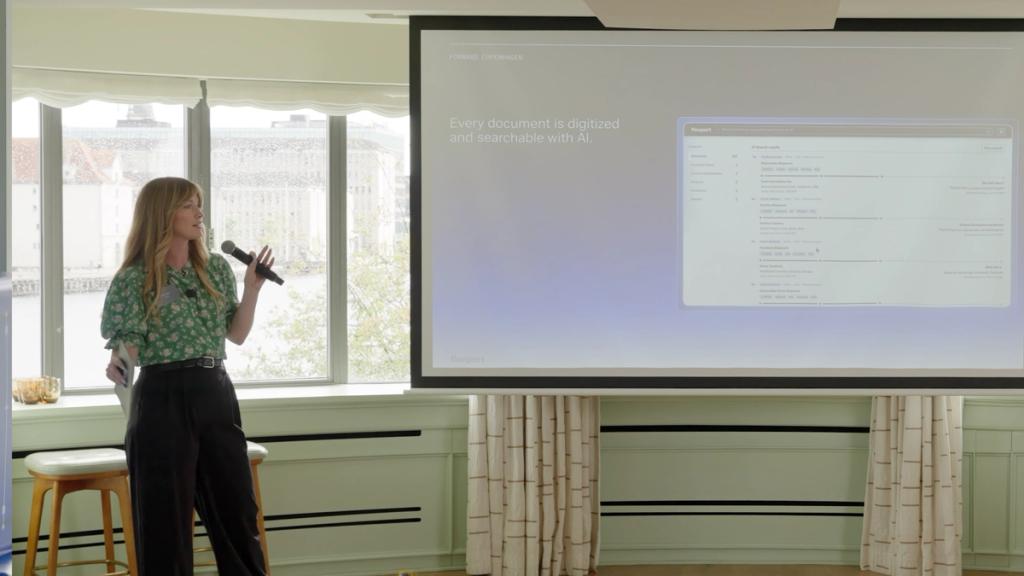
Rogan Dolan, General Manager for North Europe, walked through how Flexport builds software around two product releases a year, rather than sporadic updates. Each release bundles customer-driven fixes into a theme aimed at a specific operational problem.
- The Intelligent Supply Chain (February 2025): introduced Insights Builder and Control Tower, letting shippers ask natural-language questions, like "where are my priority shipments today," and get a visual report back.
- Defending Margin and Fee Elimination (September 2025): launched Detention & Demurrage Defender to track dwell times and flag fees before they accrue, plus express enterprise resource planning (ERP) integrations with NetSuite and Microsoft Dynamics that take under 45 minutes to set up.
- The Self-Healing Foundation (February 2026): rolled out container and lane optimization, for example consolidating 20-foot bookings into 40-foot loads at 85%+ capacity, along with customs brokerage tools and Flex Intelligence search across purchase orders, milestones, and customs holds.
Rogan's point: supply chain autonomy doesn't happen in one release. It depends on clean data, accurate dates, milestones, and container-level tracking, so the optimization tools built on top of it actually hold up.

What Flexport's Nordic clients are telling us
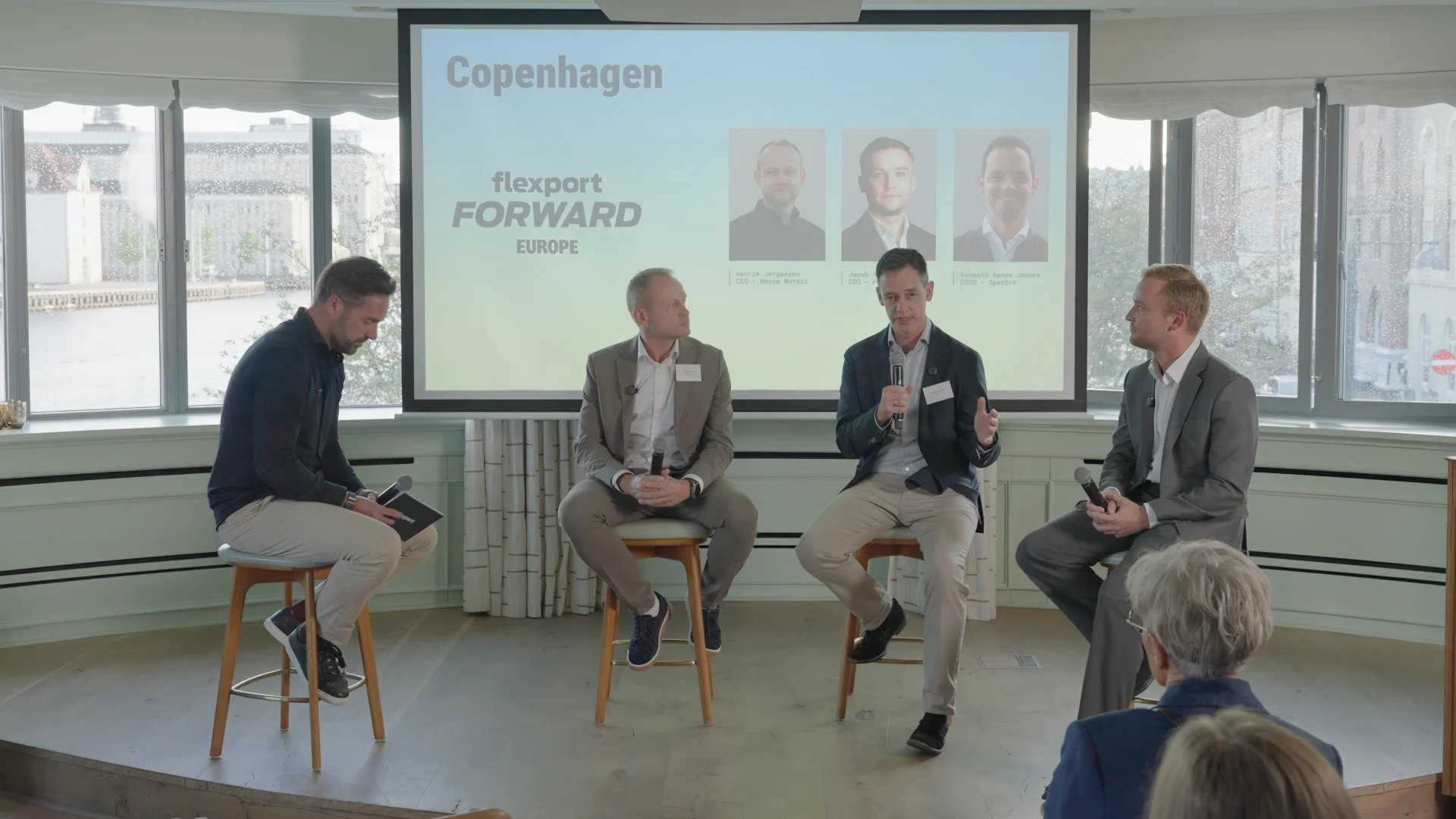
Mathijs Slangen, VP of Sales, moderated a client panel with three Danish companies spanning furniture design, garment manufacturing, and consumer packaging. A few things stood out.
- Data reliability protects people. One panellist pointed out that supply chain data isn't just numbers on a dashboard. Reliable inbound visibility for raw materials keeps factories running and protects workers from layoffs or lost wages when production stalls.
- Customer transparency is a competitive edge. Sharing live milestone tracking directly with end customers, through ERP and Business Central integrations that push real-time inventory to webshops, turns logistics from a cost center into something customers notice and trust.
- Unified platforms beat email chains. Moving off spreadsheets and scattered email threads and onto one operating platform cuts manual errors and keeps origin and destination teams aligned.
The panel also shared advice for building resilience as volumes grow:
- Hedge market volatility with a blend of contracts. For freight-sensitive cargo where shipping can be up to 15% of landed cost, relying only on the spot market is risky, and locking in 100% fixed contracts can shut out rate relief. One panellist recommended splitting volume between long-term fixed rates and index-linked floating contracts.
- Focus your team on what makes you different. Building an in-house forwarding or carrier management team can lock in fixed overhead that's slow to adjust when tariffs or trade routes shift. Partnering with a platform that adapts frees up talent for product design and customer relationships.
- Get data hygiene right before adding AI. Integrating core ERP systems and standardizing milestone reporting comes first. Automated planning and AI tools are only as good as the shipment data underneath them.
- Give factories visibility into demand. Direct visibility into retail sell-through and webshop run-rates helps upstream factories plan production weeks before purchase orders arrive, instead of reacting to batch orders.
The path forward
The evening's takeaway wasn't that volatility can be eliminated. It's that the right mix of operational agility, data, and partnerships keeps teams ahead of it.
Thank you to everyone who joined us in Copenhagen and made the first Flexport Forward event a great one.
Couldn't load video